Oakland marks Jesse Jackson’s legacy after his death, recalling decades of Bay Area activism
A local commemoration tied to a national farewell
Oakland joined a wave of remembrances for the Rev. Jesse L. Jackson Sr., the longtime civil rights leader and two-time presidential candidate who died on Feb. 17, 2026, at age 84. The city’s recognition unfolded as memorial events continued nationally, including large public services in Chicago and formal tributes across the country.
In Oakland, public officials used the days following Jackson’s death to reflect on his relationship with the city and the Bay Area, where he appeared repeatedly over decades for rallies, political organizing, and issue-focused campaigns.
Jackson’s Oakland connections: campaigns, labor issues, and public safety appeals
Jackson’s ties to Oakland date back to high-profile public appearances during the political rise of his Rainbow Coalition-era organizing and his national campaigns. Archival reporting and contemporaneous accounts document his presence in the East Bay on issues that ranged from voting and coalition-building to labor and urban policy.
In May 1984, Jackson held a major rally at Laney College in Oakland during his first run for the Democratic presidential nomination, a campaign that emphasized multiracial electoral organizing and broadened participation in national politics.
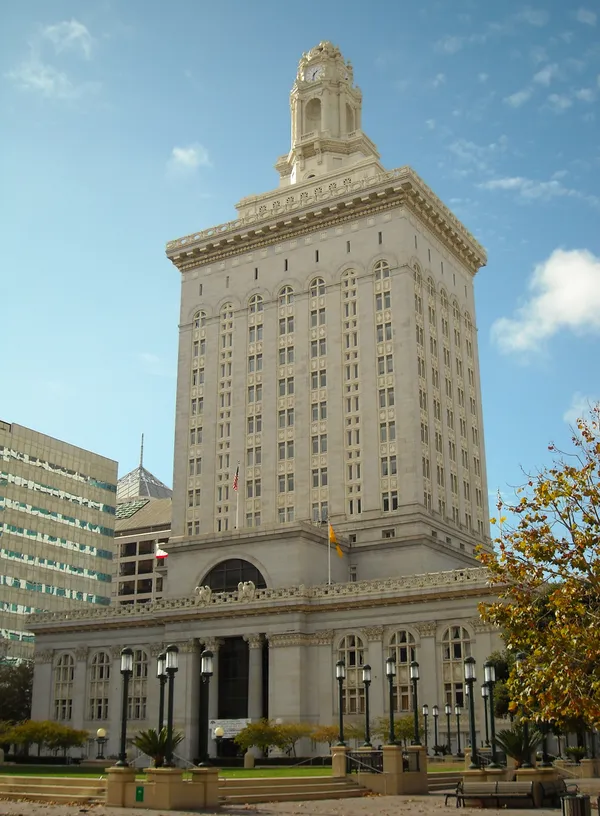
In the mid-1990s, Jackson appeared at Oakland City Hall during a dispute involving city employee compensation, where he spoke publicly about the city budget and federal urban policy in addition to the immediate labor issue.
In 2007, he spoke in West Oakland during a visit focused on gun violence, urging community action and advocating for national policy measures related to assault-style weapons.
City Hall recognition amid broader Bay Area tributes
Oakland’s commemoration included remarks by Mayor Barbara Lee, who publicly noted Jackson’s role in modern civil rights organizing and his repeated presence in California, including Oakland. Bay Area faith and civic leaders also marked his death with public reflections, with Oakland clergy participating in local broadcasts and interviews focused on Jackson’s legacy in the region.
Public remembrances in the Bay Area emphasized Jackson’s long-running practice of appearing in cities far from his home base to support local campaigns on civil rights, economic justice, and public safety.
What Jackson’s legacy represents in Oakland’s civic narrative
Jackson’s visits to Oakland reflected a pattern that characterized his national career: moving between electoral politics, labor and economic debates, and community-level organizing. In the East Bay, that meant appearing at colleges, churches, and City Hall—institutions that have historically served as focal points for civic participation and public debate.
As Oakland’s leaders invoked Jackson’s history, they placed the city’s recognition within a larger national moment of remembrance that has highlighted his decades-long influence on coalition politics, civil rights advocacy, and public life.
Telegraph Avenue Roars Back: The First Friday Season Kicks Off in a Newly Solvent Oakland
Official City Notice: New Weekend Safety Enhancements and Public Service Updates
Oakland Commute: OAAP Construction and First Fridays Detours to Watch Today