Oakland weighs converting a shuttered neighborhood grocery store into a new Oakland Public Library branch
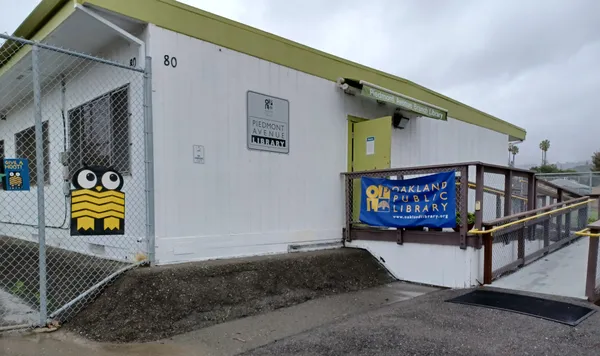
A reuse proposal emerges as Oakland reassesses where library services are most accessible
Oakland officials are evaluating whether a closed grocery store site could be repurposed into a new Oakland Public Library branch, an approach that would convert an existing commercial building into a civic facility rather than starting with a ground-up project. The concept fits a broader pattern in Oakland’s library planning: expanding or stabilizing service often hinges on securing viable sites and aligning long-term operating costs with limited public funding.
The city’s library system includes a central facility downtown and a network of neighborhood branches. Recent years have underscored how dependent library access can be on building conditions and real-estate arrangements. The Main Library underwent a months-long closure for infrastructure upgrades in 2024 before reopening later that year, while other locations have faced constraints driven by leases, maintenance needs, and capital funding cycles.
Why a former grocery store is under consideration
Converting a former grocery store can offer practical advantages for a library branch: large open floor plates, existing utility capacity, ADA-accessible entries, and parking or transit-oriented visibility. For a branch library, these elements can translate into flexible space for collections, computer stations, tutoring, early learning areas, and community meeting rooms. The tradeoffs are also significant and typically require detailed feasibility work, including seismic and roof assessments, energy upgrades, restroom retrofits, and interior redesign for acoustics, security, and program needs.
City planning discussions around new or restored branch service elsewhere in Oakland have documented the core project constraints: a suitable site must be secured, and capital funding must be identified before a project can advance beyond conceptual planning. In past feasibility work related to a potential Hoover/Durant-area branch, estimated project costs were described in the range of roughly $9 million to $15 million for an 8,000- to 12,000-square-foot facility, with land costs a separate factor.
Equity, access, and what a new branch would need to deliver
Any proposed branch created from a former retail site would be assessed against service gaps and proximity to existing libraries. Previous city materials evaluating a potential Hoover/Durant-area branch listed nearby branches within roughly two miles, illustrating how site selection can quickly become a question of walkability, transit reliability, and whether surrounding neighborhoods already have a dense cluster of public facilities.
Access: walking and transit connections, plus safe routes for youth and seniors.
Program capacity: room for technology, multilingual collections, and after-school use.
Community use: a meeting space that can operate independently from the rest of the building.
Cost and timeline: renovation scope, code compliance, and long-term operating impacts.
In Oakland’s library planning, the central question is often not only where a branch could fit, but whether the city can secure the site and sustain the service over time.
Next steps typically include site due diligence, a financing plan, community engagement on programming priorities, and a clear operational model. If city leaders proceed, the reuse of a shuttered grocery store could become a test case for delivering a modern branch more quickly than a new build—while still meeting the standards expected of a full-service public library.