Oakland Metro Chamber CEO frames economic indicators report around public safety, downtown recovery and city budget pressure
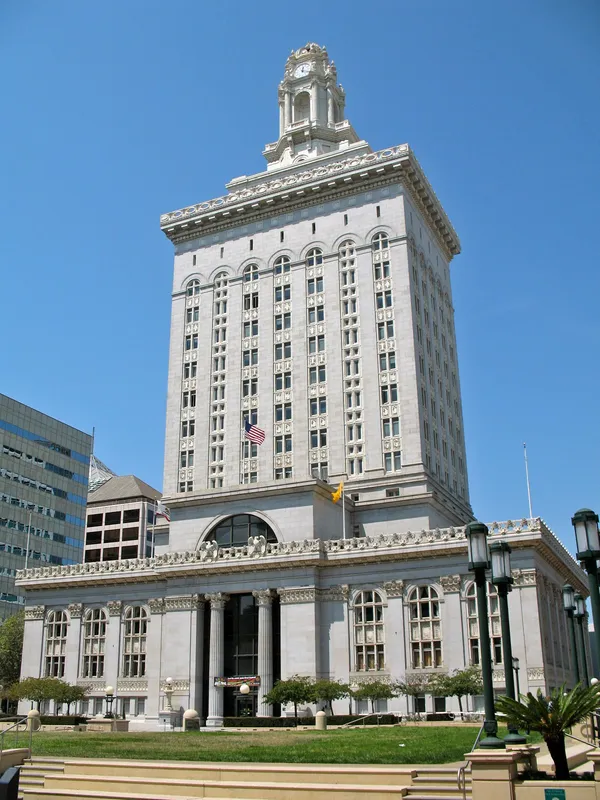
A business-facing report returns to City Hall amid fiscal strain
The Oakland Metropolitan Chamber of Commerce’s annual economic indicators work has again moved into the center of the city’s policy debate, as elected officials and business leaders weigh how to stabilize revenues and restore activity in key commercial areas. Chamber President and CEO Barbara Leslie has described the report as a decision-support tool for policymakers, arguing that reliable local data can help shape priorities as Oakland confronts a large budget deficit.
The Chamber’s economic reporting is presented publicly each spring and is prepared with support from economist Adam Fowler of CVL Economics, who has appeared alongside Chamber leadership in prior briefings. The Chamber has described its 2026 Economic Summit—held March 25, 2026 at the Oakland Museum of California—as the venue for the presentation of its 10th annual Oakland economic report, continuing a multi-year effort to translate regional and local indicators into an accessible format for stakeholders.
Public safety positioned as an economic prerequisite
Leslie’s core message around the report has focused on public safety as a foundational condition for economic recovery. In public remarks tied to the indicators report rollout in March 2025, she emphasized the need to rebuild confidence among residents, visitors and employers, and linked the pace of business formation, retention and tax-base growth to perceptions of safety—particularly in and around downtown.
That framing overlaps with findings in a separate regional analysis that examines how crime and fiscal stability can reinforce one another in Oakland. That study ties core city revenue streams—property-related revenues, business taxes, real estate transfer taxes and sales taxes—to the presence of employers and customers, and details how safety concerns can increase operating costs, suppress foot traffic and weaken investment appetite.
Downtown’s role and the pressure on revenue fundamentals
Chamber representatives have repeatedly described downtown as a critical economic engine, arguing that recovery depends in part on bringing workers, visitors and businesses back to the city’s core. The same broader policy conversation is unfolding as Oakland’s finances remain under stress, with public discussions highlighting a deficit exceeding $100 million in a recent fiscal year and the possibility that revenue growth may not keep pace with service demands.
Beyond policing and perceptions, the city’s own economic development planning has cited practical constraints for merchants and employers, including complex permitting and administrative processes, higher insurance costs, and fragile business balance sheets after years of rising costs and reduced foot traffic.
What the Chamber’s economic reporting typically tracks
The Chamber’s annual reporting and summit presentations have centered on a set of recurring themes, including labor market conditions, industry performance, business climate signals and measures of local economic momentum. In its 2026 summit description, the Chamber said the annual report is intended to provide context on Oakland’s current position and trajectory using the latest available regional and local data.
- Local and regional economic performance and sector trends
- Workforce dynamics and indicators affecting hiring and retention
- Signals relevant to business confidence, visitation and investment
- Conditions shaping downtown activity and broader economic recovery
The recurring policy implication of the Chamber’s messaging has been that economic strategies are unlikely to succeed without parallel progress on basic conditions that influence whether people choose to live, shop, work and invest in Oakland.
Next questions for policymakers and businesses
As the Chamber continues to present annual findings, the immediate questions facing Oakland remain largely operational: what near-term actions can measurably improve safety outcomes, how quickly downtown activity can be rebuilt, and how the city can stabilize revenues while maintaining core services. The Chamber’s indicators report is positioned to inform those choices by consolidating local economic signals into a shared factual baseline for decision-making.