Oakland debates limiting homeless encampment sweeps as City Council considers stronger enforcement and towing powers
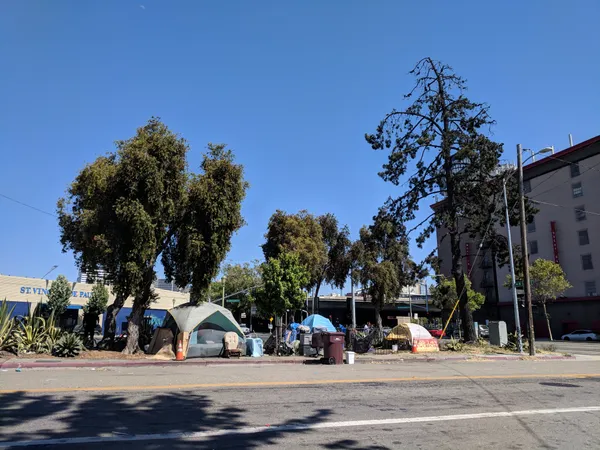
A widening split over how Oakland removes encampments
Oakland is heading into a pivotal policy debate over how the city responds to homelessness in public spaces, with the mayor’s office signaling interest in scaling back routine encampment closures while several City Council members advance a proposal that would make removals easier and enforcement tougher.
The conflict is playing out against two constraints that city leaders have repeatedly identified: a shortage of shelter and interim housing placements relative to the number of people living outdoors, and the risk that local policy could conflict with state guidance tied to homelessness funding.
What the proposed crackdown would change
A council-backed encampment abatement proposal advanced by Councilmember Ken Houston would replace key elements of Oakland’s existing approach. As described in public briefings and reporting on the measure, the proposal would permit faster removals at locations labeled “high sensitivity,” using criteria such as proximity to schools, hospitals, businesses, or critical infrastructure.
It also contemplates expanded enforcement tools, including the possibility of citations or arrests for people who refuse to leave and broader authority to tow vehicles that violate city codes, even when they are used as shelter.
- Encampments would be categorized by “sensitivity,” shaping notice periods and enforcement intensity.
- Higher-priority sites could face rapid clearance, while some lower-sensitivity areas could remain under specified sanitation and safety conditions.
- Repeated returns to cleared locations could trigger escalating penalties under the proposal’s framework.
State concerns and the $45 million funding backdrop
The council’s timeline has already been affected by state-level scrutiny. In late 2025, Oakland delayed a scheduled vote after warnings that earlier versions of the proposal risked conflicting with state homelessness guidance, raising concerns that Oakland could jeopardize eligibility for roughly $45 million in state homelessness funding. Subsequent revisions were aimed at bringing the ordinance into alignment with minimum state expectations, including clearer identification of places where unhoused people could remain without immediate enforcement.
In late January 2026, the state agency that had raised concerns signaled it was no longer threatening to withhold funding based on the revised draft, clearing a path for the ordinance to return for council consideration in late February or early March.
Mayor Barbara Lee’s direction: fewer sweeps, more system capacity
Mayor Barbara Lee has publicly framed homelessness as a top priority and, in 2025, announced the creation of an Office of Homelessness Solutions alongside a five-point plan focused on prevention, outreach, rapid diversion, interim housing capacity, and long-term housing development. The mayor’s approach has emphasized expanding placements and coordination rather than increasing punitive enforcement.
Oakland’s policy choices now center on whether encampment removals should proceed primarily through enforcement and rapid clearance, or be more tightly limited by the availability of shelter and alternatives.
What happens next
The revised encampment abatement proposal is expected to return to the Oakland City Council for a vote in the coming weeks. The decision will help define how Oakland balances public health and safety concerns near encampments with legal requirements around notice, property handling, and the practical limits created by the city’s shelter capacity.
Separately, Oakland and Alameda County held a biennial Point-in-Time Count on Jan. 22, 2026, an effort that will inform updated estimates of homelessness as city leaders debate the next phase of enforcement and services.